June 1953
The Rosenbergs’ Execution
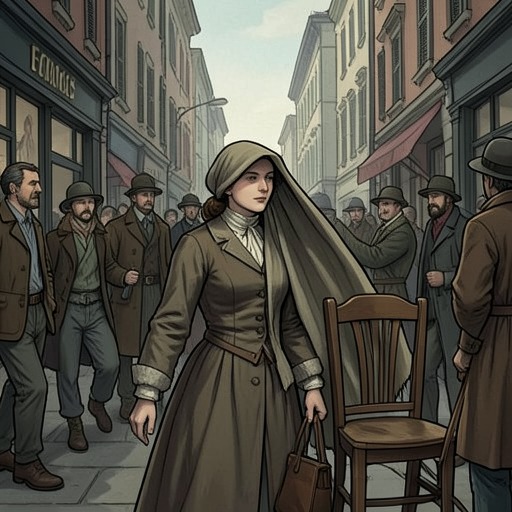
During a sultry summer in [New York City](entity:location-recall-location-new-york-city-65df0a129d4c), Esther Greenwald follows the news of Julius and Ethel Rosenberg's impending execution. The thought of electrocution lodges in her mind, and the city's heat and noise intensify her sense of unease
Early June 1953
The Prize in New York
Esther arrives in [New York City](entity:location-recall-location-new-york-city-65df0a129d4c) as one of twelve college women awarded a month’s work at a fashion magazine. The trip is meant to crown her academic and literary successes, but she feels detached from the glamorous life she is supposed to enjoy.
Early in Esther’s New York month
The Amazon’s Residents
At [The Amazon](entity:location-recall-location-the-amazon-844a048ddec7), Esther meets the other contest winners and observes the wealthy young women who live there. She is especially drawn to [Doreen](entity:character-recall-character-doreen-8a8f693597d2)’s wit and apparent freedom, while [Betsy](entity:character-recall-character-betsy-27ed7c582914)’s sunny kindness represents a more conventional alternative.
Early in the New York stay
Lenny’s Invitation
On the way to a magazine party, Esther and [Doreen](entity:character-recall-character-doreen-8a8f693597d2) accept an invitation from the disc jockey [Lenny Shepherd](entity:character-recall-character-lenny-shepherd-ad9d99146b18) and leave their stalled cab. Esther adopts the false name Elly Higginbottom, partly to distance herself from her [Boston](entity:location-recall-location-boston-aded649f4602) identity and partly to take the chance of an unscripted city adventure.
That night
Doreen and Lenny Dance
At [Lenny Shepherd](entity:character-recall-character-lenny-shepherd-ad9d99146b18)’s ranch-themed apartment, he and [Doreen](entity:character-recall-character-doreen-8a8f693597d2) dance and flirt while Esther watches from the margins. Feeling increasingly invisible, she slips out alone and walks back to [The Amazon](entity:location-recall-location-the-amazon-844a048ddec7) through the hot city.
Later that night
Doreen at the Door
After a bath and a brief sense of purification, Esther is woken by [Doreen](entity:character-recall-character-doreen-8a8f693597d2), who has returned drunk and vomits in the hallway. Esther decides inwardly to separate herself from Doreen’s reckless life, though she cannot bring herself to lock Doreen out.
The following morning
The Empty Hallway
Esther expects to find [Doreen](entity:character-recall-character-doreen-8a8f693597d2) still lying in the vomit outside her room, but the hall has been cleaned, leaving only a faint stain. The erased mess allows her to resume the day while exposing how readily she tries to disown what unsettles her.
Early in the New York stay
The Ladies’ Day Banquet
At a lavish Ladies’ Day luncheon, Esther eagerly eats caviar, chicken, and crabmeat, indulging in the abundance she could not afford at home. [Doreen](entity:character-recall-character-doreen-8a8f693597d2) is absent, spending the day with Lenny, and Esther misses her sharp companionship even as she tries to enjoy the meal.
During the New York month
Jay Cee’s Questions
[Jay Cee](entity:character-recall-character-jay-cee-38fd05193ff1) summons Esther to the office and asks what she intends to do after college. Esther cannot summon the confident career plans she has always repeated, and her honest admission that she does not know marks a frightening break with her former certainty.
Before the New York summer
The Chemistry Evasion
As [Jay Cee](entity:character-recall-character-jay-cee-38fd05193ff1) questions her future, Esther remembers persuading her college dean to excuse her from chemistry examinations while still attending class. She had used the lectures to write poems, disguising her fear of the subject as intellectual devotion.
During the New York month
The Fingerbowl Memory
At the banquet, Esther recalls mistaking the water in a fingerbowl at [Philomena Guinea](entity:character-recall-character-philomena-guinea-04884568ead1)’s house for soup and eating the floating blossoms. The memory reveals both her distance from polished social conventions and the earlier generosity that helped make her scholarship possible.
That afternoon
Poisoned Crabmeat
After the banquet, Est and Bessie were very ill on their way back to the hotel. The crab meat was found to be contaminated, and the magazine sent gifts to the sick women in an attempt to calm the scandal; Dora came back with a soup and also brought a seat card reserved
While Esther recovers in New York
Constantin’s Call
[Constantin](entity:character-recall-character-constantin-c01f41252881), a simultaneous interpreter introduced through [Mrs. Willard](entity:character-recall-character-mrs-willard-30b69895d45b), calls to arrange an outing. Esther turns the ordinary invitation into a romantic prospect, revealing how readily she invests a few details with the promise of rescue or transformation.
During recovery at The Amazon
The Fig-Tree Story
While bedridden, Esther reads a story about a Jewish man and a nun who meet beneath a fig tree. She connects it to her imagined future with Buddy and begins to feel that the life they once pictured has been spoiled by an event neither of them can undo.
Before the New York summer
Buddy’s Poem Insult
Esther recalls Buddy’s dismissive claim that a poem is a piece of dust. In her imagined retort, she argues that poems can outlast the bodies and medical work Buddy values, exposing a conflict over what makes a life meaningful.
Several years before the New York summer
The Junior Prom Invitation
[Esther Greenwood](entity:character-recall-character-esther-greenwood-569b39bf7eea) remembers that [Buddy Willard](entity:character-recall-character-buddy-willard-2dc4c06695a5) had come to her university to find her, later inviting her to a freshman dance at [Yale University](entity:location-recall-location-5f610bd54571); previously, Buddy had first come to campus to attend another dance with Joan Holloway. At that time, this invitation seemed to confirm that her distant admiration for Buddy
At the Yale Junior Prom
The Prom’s Failed Kiss
Badi treated Estelle more like a friend than a lover. The kiss after the ball was dry and disappointing. He proposed that the two meet regularly, but Estelle's romantic fantasies had already begun to clash with his casual thoughts
The autumn before Esther’s New York summer
The Birth in the Hospital
While visiting the medical school of Badie, Estelle witnessed Madame Tomorilo giving birth. The childbirth process was painful and cruel, yet the doctors assured the mother she would forget the pain, which made Estelle begin to question how men dominate women's experiences of reproduction
During the same visit
Buddy’s Sexual Confession
After Badi showed his naked body to Estelle, he admitted that during his stay at Coderch, he had repeatedly slept with a female server named Gladys. More disturbing to Estelle was that he claimed to be pure, yet expected her to remain chaste as well
After Esther breaks with Buddy
Buddy’s TB Diagnosis
Badi called from [Boston](entity:location-recall-location-boston-aded649f4602), saying he has tuberculosis and will go to a sanatorium in the Adirondack Mountains. Estelle agreed to write a letter and visit him, but privately felt relieved, because his illness allowed her to avoid announcing that they had broken up and not have to re-date
During Esther’s New York month
The United Nations Visit
[Constantin](entity:character-recall-character-constantin-c01f41252881) took Est to the [United Nations Headquarters](entity:location-recall-location-497c74133fe1), where she watched the interpreters at work and listened to languages she could not understand. This experience deepened her sense of inferiority: she began listing all the skills she could not master, worrying that her achievements gained through awards and scholarships would come to
During the same outing
The Withering Fig Tree
Faced with all the possible lives before her, Esther imagines herself sitting on a fig tree, unable to choose between being a poet, professor, editor, traveler, wife, or lover. The fig tree withers and falls, vividly presenting her paralyzing state when facing choices
That evening
Dinner with Constantin
A feast and wine briefly revived Est's spirits, and she decided to let Constantine lure her. However, when she arrived at his apartment, he did not actively show interest; Est fell asleep beside him, and when she left later, they did not cross the sexual boundaries she had originally envisioned
That night
Marriage as a Kitchen Mat
When she awoke, Esther lay beside [Constantin](entity:character-recall-character-constantin-c01f41252881), imagining marriage would become cooking, cleaning, crawling like a kitchen mat at her husband's feet, subject to his will. She recalled [Mrs. Willard](entity:character-recall-character-mrs-willard-30b69895d45b)'s family life, viewing daily household chores as a warning, reminding her of the terrifying loss of independence
After returning from Constantin’s apartment
The Broken Leg Memory
Rainwater made Estelle think of the old injury on her tibia. She kept wondering whether it was Buddy who broke her leg or if she had intentionally broken her leg to punish herself. This uncertainty reflected how guilt and resentment were intertwined in her memory
The Christmas after Buddy’s diagnosis
The Drive to the Sanatorium
Mr. Willard drove Esther through the snow-covered countryside to the Adirondack Mountains to visit Buddy. On the way, he told Esther that he and [Mrs. Willard](entity:character-recall-character-mrs-willard-30b69895d45b) had always wanted a daughter. This kind gesture not only failed to comfort her but made her feel more trapped
On arrival at the sanatorium
Buddy’s Changed Appearance
Estelle found that Badi was plump, enthusiastic, and completely different from the gaunt, weak image she had imagined. In the room, he showed her a poem he had written and proposed to her; Estelle told him she would never marry
During the sanatorium visit
Esther’s Two Worlds
Est reminded Badi that she wanted to live both in the city and the country, something he had once called neurotic. She embraced this contradiction, declaring that she wanted to fly freely between mutually incompatible possibilities, rather than settle for a predetermined life
During the same winter visit
The Ski-Slope Fall
Badi persuaded Estelle to take the cable car up the mountain, although she had no experience. After reaching the summit, she looked down at the snow slope and decided to go straight down. Before colliding with the snow and breaking her leg, she had a moment of pure exhilaration; this
June 1953
Hilda’s Rosenberg Remark
After returning to New York, Estelle asked Hilda if the execution of the Rosenberg couple was very terrifying. Hilda replied that the terrifying thing was that they were still alive. As the execution date approached, Estelle felt repulsed by this careless and cruel statement
Late in the New York month
The Failed Photograph
At the final photo session, the other women pose with objects representing their ambitions, while Esther cannot name what she wants. Pressed to smile as a poet holding a paper rose, she breaks down crying before the camera can capture the cheerful image expected of her.
The last days of June 1953
The Writing Course Rejection
Esther learns that she has not been accepted to the summer writing course she had counted on. The rejection destroys the bridge she imagined connecting her New York summer to a purposeful season of writing and leaves her unable to decide what to do next.
The night before Esther leaves New York
Marco’s Diamond
At a country-club dance, [Doreen](entity:character-recall-character-doreen-8a8f693597d2) introduces Esther to Marco, who gives her a diamond stickpin and then behaves with contemptuous possessiveness. His gift becomes a token of menace rather than glamour as he takes control of the evening.
That night
Marco’s Assault
Marco forces Esther into the garden, throws her into the mud, tears her dress, and calls her a slut while trying to assault her. Esther fights back, strikes him, and escapes, leaving him searching for the diamond in the dark.
Before dawn after the assault
Clothes into the Night
Back at [The Amazon](entity:location-recall-location-the-amazon-844a048ddec7), Esther climbs onto the roof and throws her clothes into the wind one piece at a time. The act is an effort to shed the identity represented by the costly wardrobe and to mark her sense that the New York chapter has ended.
Early July 1953
The Return Home
Esther travels home in clothes borrowed from [Betsy](entity:character-recall-character-betsy-27ed7c582914), carrying short stories and unripe avocados in her suitcase. Her mother tells her that the writing course has rejected her, confirming the failure Esther had already feared.
Soon after Esther returns home
Dodo Conway’s Family
From her bed, Esther watches [Dodo Conway](entity:character-recall-character-dodo-conway-f0d3fe807af6) pushing a baby carriage with her children. The domestic abundance of the neighborhood repels her, even as she imagines that a different, simpler life might have been possible.
Early July 1953
The Summer School Refusal
Jody invites Esther to join the [Cambridge](entity:location-recall-location-cambridge-9c17d42a788b) apartment and suggests she take another course, but Esther refuses. She later cancels her summer-school plans and writes back to Buddy that she is engaged to a simultaneous interpreter and wants no further contact.
July 1953
The Novel That Stalls
Esther decides to write a novel about a disguised version of herself, Elaine, and begins a page on the breezeway. She soon concludes that she lacks experience and cannot imagine a future job or direction, so the project stalls almost immediately.
Mid-July 1953
Finnegans Wake and the Future
Esther tries to read [Finnegans Wake](entity:object-recall-object-283a3028fd63) and finds its language impenetrable, then realizes she lacks requirements for both her honors program and an ordinary English major. The discovery strips away the belief that academic achievement has secured her a future.
Late July 1953
The Psychiatrist Referral
Unable to sleep or read, Esther asks her family doctor for more sleeping pills. The doctor instead refers her to [Doctor Gordon](entity:character-recall-character-doctor-gordon-f0f8764999ea), recognizing that Esther’s condition requires psychiatric care.
Late July 1953
Doctor Gordon’s First Interview
Esther sees [Doctor Gordon](entity:character-recall-character-doctor-gordon-f0f8764999ea), whose polished manner and family photograph immediately alienate her. He asks about her symptoms and college but offers no meaningful help, leaving her feeling unseen and more distrustful of treatment.
Late July 1953
The Sailor on the Common
Using her false name, Esther walks with a young sailor around [Boston Common](entity:location-recall-location-5ba83d347bc4) and imagines starting over as an orphan in [Chicago](entity:location-recall-location-73935e623d95). She breaks into tears when she mistakes a passerby for [Mrs. Willard](entity:character-recall-character-mrs-willard-30b69895d45b), revealing the way her fantasy identity cannot free her from distress.
Late July 1953
The Shock-Treatment Recommendation
At a second appointment, Esther shows [Doctor Gordon](entity:character-recall-character-doctor-gordon-f0f8764999ea) the scraps of a letter whose handwriting has become childlike and distorted. He speaks with her mother and recommends shock treatments at his private hospital in [Walton](entity:location-recall-location-11b83292cb4b), a prospect that frightens Esther.
Late July 1953
The Ledge Newspaper Story
In the [Public Garden](entity:location-recall-location-3cb6bc3b7d3c), Esther reads about a man rescued from a high ledge and studies the report for clues about suicide. She begins calculating ways to die, while the brief newspaper stories become almost the only reading she can manage.
Late July 1953
The Planned Escape
Esther considers fleeing to [Chicago](entity:location-recall-location-73935e623d95) but has too little money and cannot work out a route. After hearing a bus announcement for a stop near home, she boards and returns rather than completing the escape.
Late July 1953
The First Shock Treatment
At [Doctor Gordon](entity:character-recall-character-doctor-gordon-f0f8764999ea)’s hospital in [Walton](entity:location-recall-location-11b83292cb4b), Esther sees patients in a disordered, frightening state and is taken for electroconvulsive treatment. The machine jolts her violently, recalling an earlier childhood electric shock; she wakes confused and feels that the treatment has harmed rather than helped her.
After the first treatment
Esther Leaves Walton
Esther refuses to return to [Doctor Gordon](entity:character-recall-character-doctor-gordon-f0f8764999ea)’s hospital, and her mother interprets the refusal as proof that her daughter is ready to recover. Esther, however, remains in a state of despair and soon sees her own photograph as resembling a dead starlet.
Late July 1953
The Attempted Wrist Cutting
Esther locks herself in the bathroom and tries to cut her wrists with a Gillette blade. She cannot bring herself to make the second cut, makes only a shallow wound in her calf, bandages it, and leaves for [Boston](entity:location-recall-location-boston-aded649f4602).
Late July 1953
The Deer Island Visit
Esther travels to [Deer Island Prison](entity:location-recall-location-3093f358e8c7) and speaks with a guard about the place and its inmates. She imagines a life by the sea with children and a modest household, then sits on a sandbar as the tide comes in.
That evening
The Aborted Sea Death
As cold water reaches her feet, Esther waits for the sea to make her decision but recoils from the pain of dying. She walks back to shore, her shoes left behind like a compass pointing toward a death she cannot yet enact.
Early August 1953
The Hanging Attempt
Esther tries to hang herself with the cord from her mother’s bathrobe but cannot find a suitable place to fasten it. When she tries to tighten the cord around her neck, her hands loosen at the crucial moment, and she concludes that her body keeps resisting her wish to die.
Early August 1953
The Failed Drowning
At a beach outing with Jody, Mark, and Cal, Esther swims toward a distant rock intending to keep going until she can no longer return. Each dive brings her back to the surface, and she gives up the attempt and turns toward shore.
Early August 1953
The Maternity-ward Departure
Assigned to deliver flowers at the maternity ward, Esther sorts out dead and dying blooms and accidentally disrupts the patients’ bouquets. When nurses rebuke her, she abandons the volunteer uniform in a washbasin and leaves the hospital.
Early August 1953
The Visit to Her Father’s Grave
Esther visits the town cemetery and finally finds her father’s grave. She breaks down in the rain, grieving openly for the first time since his death and confronting a loss her family had never properly mourned.
August 17
The Sleeping-Pill Overdose
After her mother leaves for work, Esther takes a bottle of sleeping pills into a dark cavity beneath the house and swallows them with water. Her disappearance prompts a search, and her mother eventually hears her faint groans from the cellar hole and finds her alive.
After the overdose
The Hospital Awakening
Esther wakes in darkness, bruised and bandaged, believing for a time that she is blind. Her mother, brother, nurses, and a young hospital doctor visit her, but she rejects the doctor and does not welcome her family’s concern.
During the first hospital stay
The Broken Mirror
When Esther demands a mirror, a nurse shows her a reflection of her battered, shaved head and bruised face. Esther smiles at the unfamiliar image and breaks the mirror, after which she is transferred to a psychiatric ward in [Boston](entity:location-recall-location-boston-aded649f4602).
After transfer to Boston
The Psychiatric Ward
Esther encounters patients who repeat rituals, doctors who question her, and a ward where she feels observed rather than understood. She refuses cooperation and privately hopes her mother can remove her from the hospital.
During the Boston ward stay
The Bean-Tray Defiance
At a meal, Esther serves herself and the other patients, then retaliates against an attendant who mocks her by kicking him. She later nudges a tray of thermometers to the floor and secretly pockets a bead of mercury, finding pleasure in small acts of defiance.
After the hospital transfer
Philomena Guinea’s Intervention
[Philomena Guinea](entity:character-recall-character-philomena-guinea-04884568ead1) intervenes after learning of Esther’s crisis and pays to move her from the crowded city ward to a better private institution. Esther recognizes the help but remains emotionally numb, convinced that she will carry the bell jar wherever she goes.
Later in the summer of 1953
Arrival at Caplan
Esther enters the private hospital and is assigned to [Caplan](entity:location-recall-location-3d9846f256df), where she initially distrusts the other patients and staff. She meets [Valerie](entity:character-recall-character-valerie-879cd9992233), [Miss Norris](entity:character-recall-character-miss-norris-17bb5811cbf5), and [Doctor Nolan](entity:character-recall-character-doctor-nolan-9e80b560d694), a woman psychiatrist whose calm presence differs sharply from [Doctor Gordon](entity:character-recall-character-doctor-gordon-f0f8764999ea)’s.
Early in Esther’s Caplan stay
Doctor Nolan’s Promise
Esther tells [Doctor Nolan](entity:character-recall-character-doctor-nolan-9e80b560d694) about the traumatic treatment she received from [Doctor Gordon](entity:character-recall-character-doctor-gordon-f0f8764999ea). Doctor Nolan assures her that any future shock treatment will be explained and performed differently, beginning a cautious relationship of trust.
During Esther’s Caplan stay
Valerie’s Lobotomy
On a walk, [Valerie](entity:character-recall-character-valerie-879cd9992233) shows Esther the scars left by a lobotomy and describes her change from an angry patient to someone calm and content in the hospital. Her account offers Esther a disturbing vision of recovery achieved through the removal of feeling.
During the Caplan stay
Miss Norris Moves to Wymark
Esther spends long hours trying to draw [Miss Norris](entity:character-recall-character-miss-norris-17bb5811cbf5) out of silence, but Miss Norris never speaks. When the staff transfer her to [Wymark](entity:location-recall-location-89076a429c94), Esther learns that unlike her own improving condition, Miss Norris is moving to a more restrictive ward.
Later in the hospital stay
Joan Arrives at Caplan
Esther discovers that [Joan Gilling](entity:character-recall-character-joan-gilling-351bc46f4b1a), whom she knew from college, has become a patient in the same institution. Joan says she came after reading about Esther’s disappearance and describes her own despair and a suicide attempt in New York.
During Esther’s treatment at Caplan
The Insulin Reaction
After an insulin injection, Esther experiences a temporary, lightened state and is given hot milk by the night nurse. [Doctor Nolan](entity:character-recall-character-doctor-nolan-9e80b560d694) tells her that visitors will be restricted for a while, offering Esther relief from the parade of people measuring her against her former self.
On Esther’s twentieth birthday
The Birthday Roses
Esther’s mother brings roses to the hospital, but Esther cannot accept them as a birthday gift and throws them into the wastebasket. She tells [Doctor Nolan](entity:character-recall-character-doctor-nolan-9e80b560d694) that she hates her mother, expecting judgment; Doctor Nolan instead accepts the feeling without rebuke.
After Esther’s birthday
Transfer to Belsize
Esther is moved from [Caplan](entity:location-recall-location-3d9846f256df) to [Belsize](entity:location-recall-location-cf7a5de28e86), the hospital’s less restrictive house for patients nearing discharge. She fears she is not ready and measures herself against Joan, whose apparent progress has become an unsettling mirror.
Soon after the move to Belsize
The Second Shock Treatment
Esther discovers that she is scheduled for electroconvulsive treatment and feels betrayed because she thought [Doctor Nolan](entity:character-recall-character-doctor-nolan-9e80b560d694) would warn her beforehand. Doctor Nolan comforts her, accompanies her to the treatment room, and ensures that it is administered in a controlled, humane manner.
During the following weeks
The Treatment Takes Effect
Esther wakes from treatment with a sense of peace and finds the bell jar lifted enough for her to breathe. [Doctor Nolan](entity:character-recall-character-doctor-nolan-9e80b560d694) explains that treatments will continue three times a week, and the short course helps restore Esther’s ability to function.
During recovery at Belsize
Joan’s Account of the Past
Joan tells Esther that she once admired Buddy’s parents and had visited their home before Esther became close to Buddy. She also confesses that Buddy’s assumptions about women had helped sour her view of him, adding another strand to the women’s uneasy connection.
During Esther’s recovery
The Contraceptive Fitting
With [Doctor Nolan](entity:character-recall-character-doctor-nolan-9e80b560d694)’s encouragement, Esther secretly visits a doctor for contraception, using money [Philomena Guinea](entity:character-recall-character-philomena-guinea-04884568ead1) provided. The appointment feels like a step toward sexual independence and freedom from the fear that an unwanted pregnancy could determine her future.
Late in Esther’s hospital stay
Joan Leaves for Cambridge
Joan says she will leave the institution to live with a nurse in [Cambridge](entity:location-recall-location-cambridge-9c17d42a788b), while Esther must remain until her college term begins. Esther resents Joan’s apparent head start but acknowledges the bond forged by their parallel crises.
Near the end of the hospital stay
Esther Meets Irwin
On an outing to [Cambridge](entity:location-recall-location-cambridge-9c17d42a788b), Esther meets [Irwin](entity:character-recall-character-irwin-0cf87aaa0960), a young mathematics professor, and accepts coffee before going to his apartment. She decides he is intelligent, experienced, and sufficiently separate from her ordinary life to be her first sexual partner.
That evening
The Hemorrhage
Esther and [Irwin](entity:character-recall-character-irwin-0cf87aaa0960) have sex, and Esther experiences severe pain and heavy bleeding. She returns to Joan’s apartment, where Joan recognizes the emergency and takes her to a hospital for treatment.
Later that winter
Joan’s Disappearance
After returning to [Belsize](entity:location-recall-location-cf7a5de28e86), Joan goes out alone to a movie and fails to come back by curfew. [Doctor Quinn](entity:character-recall-character-doctor-quinn-c8611c901a96) asks Esther whether she knows where Joan might be, but Esther has no answer.
The following dawn
Joan’s Suicide
[Doctor Quinn](entity:character-recall-character-doctor-quinn-c8611c901a96) tells Esther that Joan has been found hanged in the woods by frozen ponds. Esther is shaken by the news, while [Doctor Nolan](entity:character-recall-character-doctor-nolan-9e80b560d694) later insists that no one else should carry responsibility for Joan’s death.
Winter, before Esther’s discharge
The Funeral and the Heart
Esther attends Joan’s funeral and watches the coffin disappear into a landscape of snow and grave markers. She listens to her heart’s persistent declaration that she is alive, a fragile affirmation amid death and uncertainty.
January 1954
Buddy’s Visit
With discharge approaching, Buddy visits Esther at the hospital and arrives in the snow. She helps dig out his car, then rejects his anxious suggestion that he may have driven women crazy, telling him that neither she nor Joan was his responsibility.
Near the discharge interview
Esther Ends Things with Irwin
Esther calls [Irwin](entity:character-recall-character-irwin-0cf87aaa0960) about the hospital bill for her emergency treatment and refuses his invitation to meet again. The exchange closes their brief encounter and leaves her feeling weak but free of an unwanted tie.
January 1954
The Discharge Interview
Esther waits to face the hospital’s board of directors, uncertain whether she is truly ready to leave. [Doctor Nolan](entity:character-recall-character-doctor-nolan-9e80b560d694) guides her into the interview room, where the doctors and staff turn toward her as she crosses the threshold into an unsettled future.
At the novel’s ending
The Bell Jar’s Uncertain Return
Esther recognizes that the memories of her breakdown and hospitalization remain part of her, even as she prepares to return to college. She fears that the bell jar may descend again, and the novel ends without promising that recovery will be permanent.